
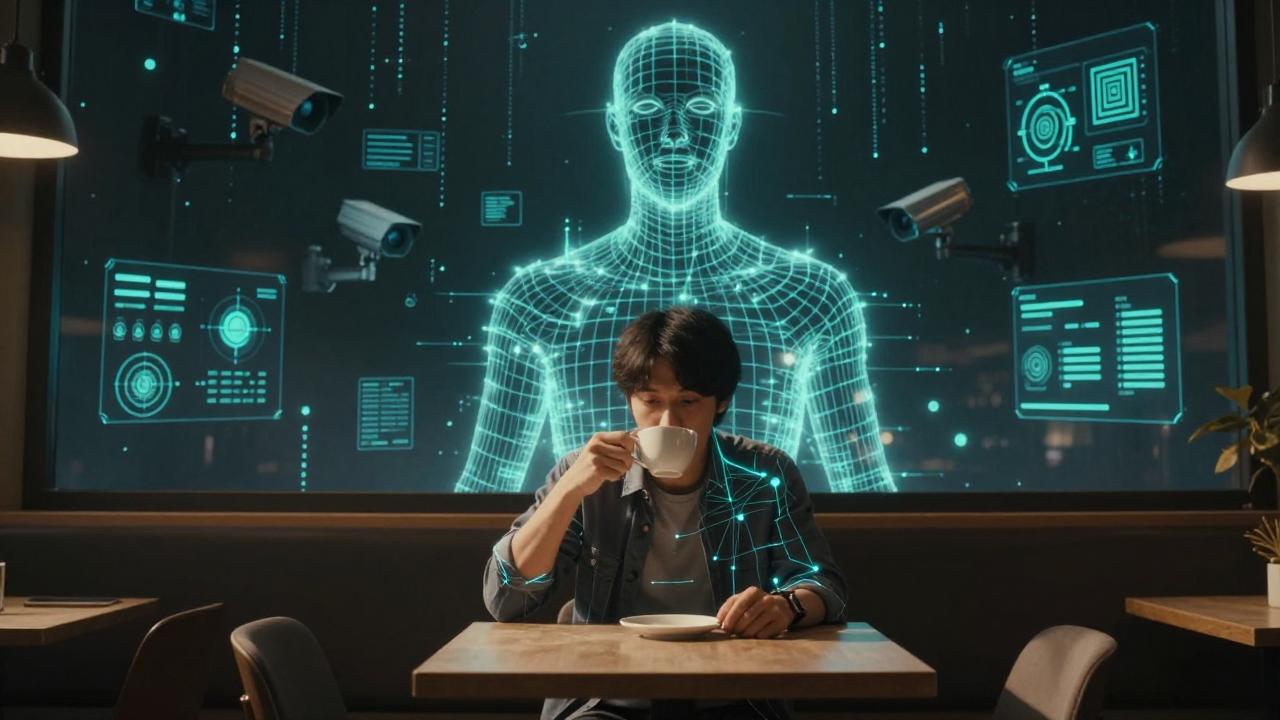
“Do you trust me?” So began a former manager of mine during the ritualised humiliation we call a performance review. It was, to put it mildly, a discomfiting inquiry from a man whose own breaches of confidence had already rendered the term meaningless between us. But the discomfort runs deeper still, for it presupposes equality in a relationship that is fundamentally hierarchical. And if you think the dynamic between employee and employer is fraught, consider the even more lopsided transaction between citizen and state, where trust is demanded of one party while being conspicuously withheld by the other.
Across the globe, including in our supposedly liberated corners of Europe, governments are in the business of stitching together surveillance apparatuses with the fervour of men laying track for a train whose destination they dare not name. Criminals and terrorists, we are told, shall be hunted down with unprecedented efficacy. Who among us would not applaud the apprehension of villains and zealots? It is, as ever, the seduction of security that makes the bargain palatable: the promise that someone, somewhere, is keeping watch on our behalf.
The Banality of Infrastructure
Yet there lies buried — scarcely acknowledged, never debated — a proposition so elementary that its neglect constitutes negligence: the infrastructure constructed today for virtue can be repurposed tomorrow for villainy. The architecture of oppression requires no architect of genius; it requires only the indifference of those who built it.
Need I remind you, dear reader, of the German Occupation of The Netherlands? The Dutch identity card, that modest paper talisman, bore the confession of its bearer’s faith. An innocuous particularity in calmer epochs. Until the German occupier discovered its utility in the systematic identification of Jews. Data, stored and categorised, is never neutral. It waits, patient, unblinking, indifferent, for its moment of vindication.
Nor is this merely a matter of dusty archives and fading photographs. We require only to cast our gaze across the Atlantic, where a president, democratically elected despite his demonstrable contempt for democracy himself, has presided over the metamorphosis of the Immigration and Customs Enforcement agency into a paramilitary force of almost Kafkaesque reach. Mass surveillance, that creature of the state, has proven infinitely malleable and useful in its new hands.
The question, therefore, is not whether the architects of our present moment harbour benevolent intentions. Intentions, in matters of power, are ephemeral and ultimately irrelevant. What endures is the apparatus itself and the capacities it confers upon whoever inherits it. Democratic norms are not carved in stone; they are conventions, habits, customs, all of which prove perilously mutable when confronted by a new regime’s appetites. And once the machinery exists, what resistance remains to those who would wield it against political opponents, dissidents, or simply inconvenient populations?
The Asymmetry of Transparency
Here is the crux of the matter: the citizen cannot hide from the state, while the state, by design, remains opaque to the citizen. Power, in any meaningful calculus, resides in capacity, not intention. And modern technology has tilted the scales with breathtaking velocity.
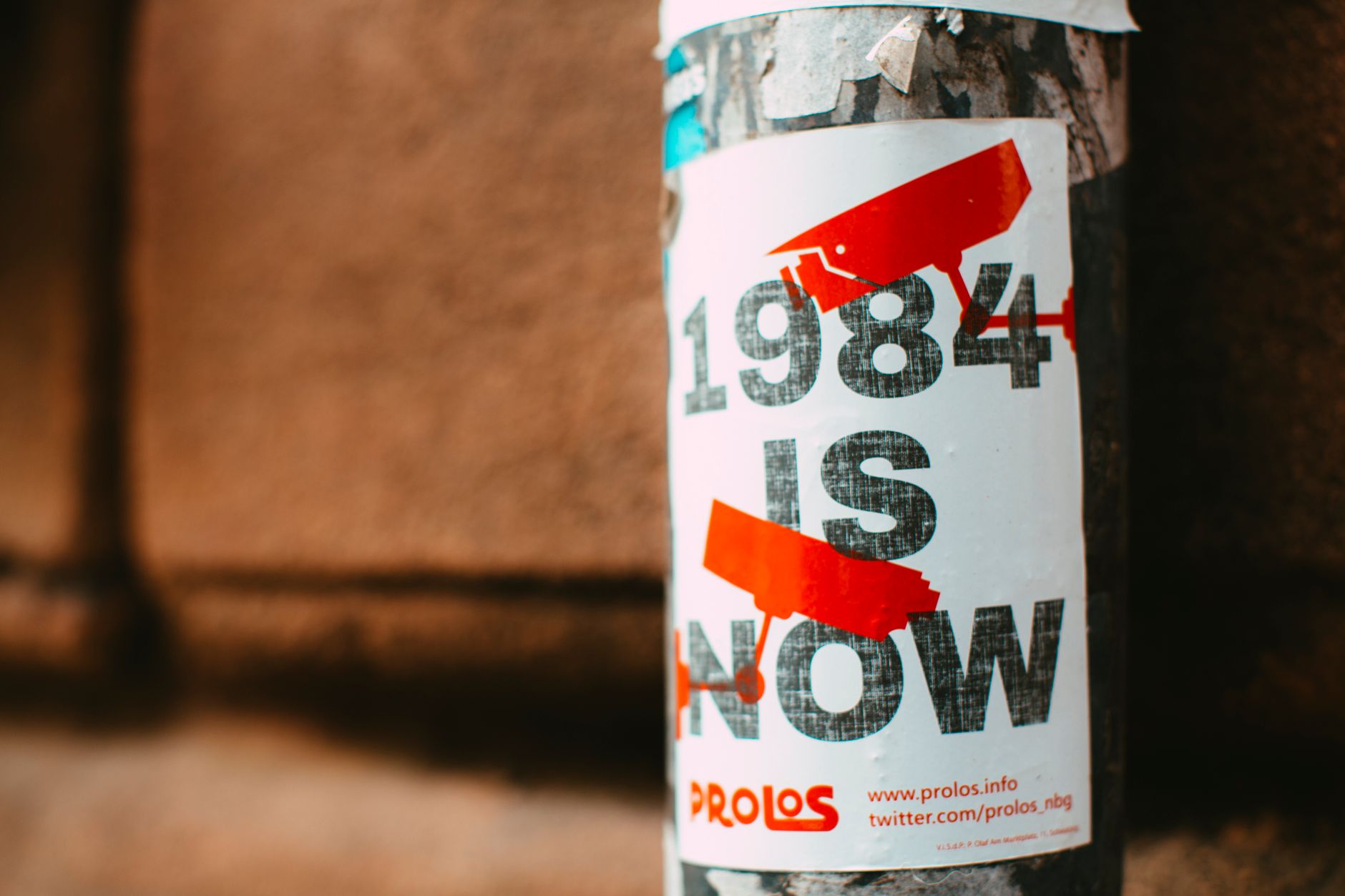
Automatic Number Plate Recognition cameras chart our comings and goings. Algorithmic risk-assessments generate profiles on the basis of dubious data and incontestable prejudice. Datasets, linked and cross-referenced, render the private life of the average citizen completely legible, while the operations of government remain cloaked in secrecy. Predictive policing, that Orwellian pretence of benevolence, establishes feedback loops wherein particular communities become perpetual suspects, condemned to the surveillance state’s endless gaze.
The danger, of course, is not confined to abuses in the present though those loom sufficiently large. Far graver is the prospect that we are constructing, with our own consent, an edifice of domination that will burden generations we shall never meet.
What Democracy Requires
Safety, I grant you, is indispensable. No one, least of all those of us who have lived under authoritarian regimes, denies the necessity of order. But there exists, and I insist upon this distinction, a categorical difference between targeted investigation predicated on suspicion and supervised by judicial authority, versus a permanent infrastructure that renders the entire populace monitorable, treating every citizen as a presumptive criminal. One is consistent with democracy; the other, with autocracy.
Watch, if you will, as surveillance tools erected for noble purposes are gradually redeployed for ignoble ones. The threshold for “temporary” expansion lowers with predictable regularity. Nothing, after all, is so enduring as a provisional measure. Legal protections and oversight mechanisms lumber along in their bureaucratic inertia, too slow and cumbersome to provide meaningful restraint.
And so we circle back to the original question: trust. A government that renders its citizens transparent implicitly confesses its distrust of them. Yet on what grounds, pray tell, can the citizen reciprocate this trust when the government itself operates without transparency, when it demonstrates repeatedly its inability to steward the data entrusted to it with anything resembling responsibility?
Most risks, I submit, are manageable without rendering citizens perpetually legible. Indeed, in a genuine democracy, it should not be desirable for citizens to be wholly monitorable. Our systems ought to be constructed with these constraints in mind: not centralised, not permanent, not expansible into instruments of total control, and incapable of exhaustive behavioural profiling.
Democracy is fragile — alarmingly so. Surveillance infrastructure does not fortify it; it corrodes it. Shall we permit ourselves to create conditions wherein a single incident, or a mere shift in administrative temperament, suffices to undo centuries of hard-won liberty? Should the answer to that be “no” — as I trust it is — then we must interrogate, mercilessly and without concession, every apparatus that concentrates power, pools data, and renders the citizen transparent to the state. The American experiment, as currently unfolding, provides ample and painful illustration.
The Final Question
The genuine question before us is not whether we wish to employ technology against “the evil.” We do, all of us who are reasonable. The question is whether we consent to the construction of an infrastructure of total control, available to every successive ministry, every succeeding administration, every emergent European bureaucracy or autocrat, for the monitoring of all. The political reality of the United States demonstrates with brutal clarity how swiftly circumstances can alter: ICE standing as testament to a surveillance apparatus that has become AI-driven, vendor-integrated, and scalable at alarming velocity, with consequences predictably baleful.
Concentrate power, and you invite its exercise. To suppose otherwise is either naïveté or duplicity. The bar, therefore, for erecting such infrastructures in the first instance ought to be set not merely high but forbiddingly, perhaps impossibly so.